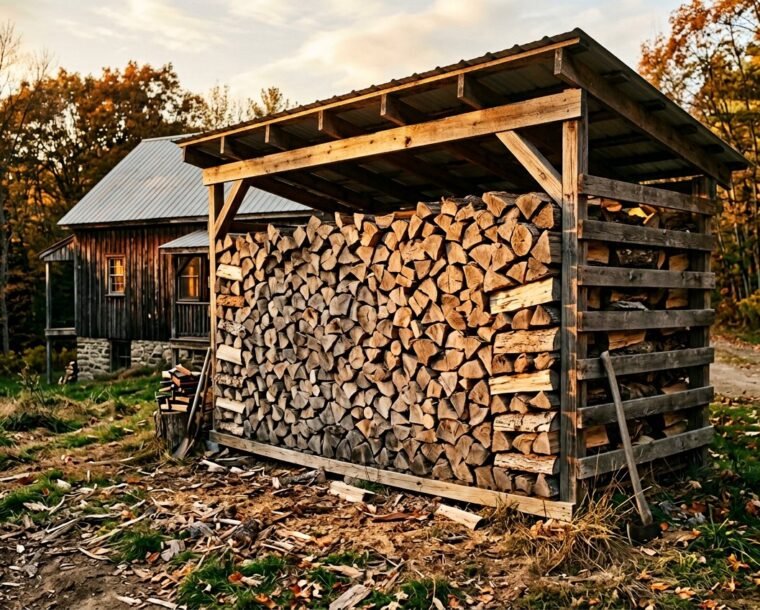
Almost every “my new stove smokes” call we take in October traces back to firewood that is not dry enough. Seasoning is not optional — it is the difference between a stove that heats and a stove that smoulders.
Why moisture matters more than species
Freshly cut hardwood can be 50% water by weight. Burning it wastes energy boiling that water off, cools the firebox, and sends half-burned gases up the flue where they condense as creosote. Well-seasoned wood sits near 15–20% moisture and gives roughly a fifth more usable heat per cord.
The 12-month rule
- Split first, stack second. Wood dries through its exposed faces — rounds barely dry at all.
- Twelve months minimum for softwood, eighteen to twenty-four for dense hardwood like oak. Two years is a safe target.
- Off the ground, in the wind. A single row with the prevailing wind across it dries faster than a double-stacked pile in a shed.
- Top cover only. A tarp over the top sheds rain; wrapping the whole stack traps moisture.
How to test a split
Split one piece and touch the freshly exposed face to your cheek or lip. Cold and dry means ready; cool and damp means keep waiting. A cheap pin-type moisture meter on a room-temperature split is the other reliable test — pressing it into a frozen log gives a false high reading.
What to do if you are caught short
Buy kiln-dried wood for this season and season next winter’s wood alongside it. Kiln-dried costs more per cord but you burn less of it, and it comes tested. Do not try to hurry the process with a hot fire and wet wood — you will glaze the flue.
Storage at the stove
Bring in a day or two of splits at a time. A full week’s worth stacked against the stove is a fire and moisture problem at once: it dries unevenly and it puts combustible material closer to the appliance than the clearances allow.
Written by admin Firewood & Fuel